


Functional vs. Decorative Resinous Flooring: Understanding the Difference—and When You Need Both
Posted by Floorguard Products on Jun 10th 2026
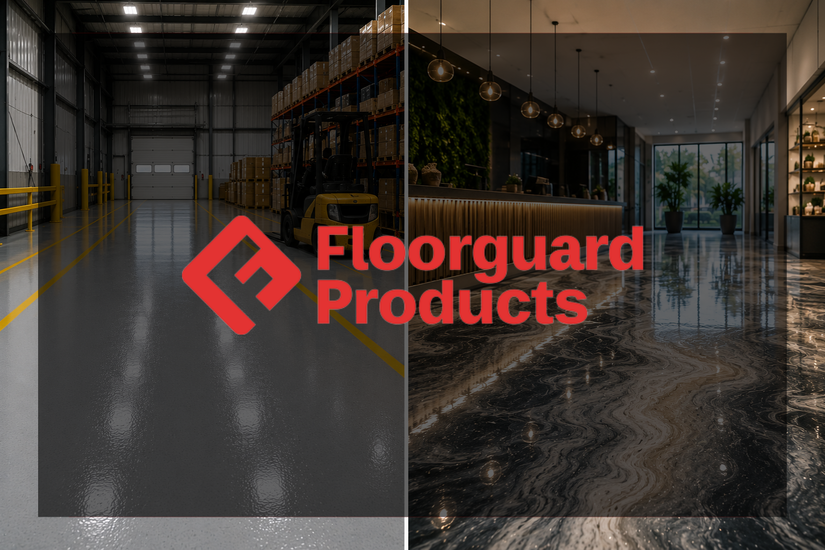
Not Every Floor Is Designed for the Same Purpose
Walk into a luxury automotive showroom and you'll likely see a beautiful decorative flake floor.
Walk into a food processing facility and you'll likely find a highly functional urethane cement system.
Both are resinous floors.
Both protect concrete.
Yet they were designed for completely different reasons.
One of the biggest misconceptions in the flooring industry is assuming all resinous flooring systems serve the same purpose.
They don't.
Some floors are selected primarily for appearance.
Others are selected almost entirely for performance.
And increasingly, facility owners are demanding both.
The challenge isn't choosing between decorative and functional flooring.
The challenge is understanding when aesthetics matter, when performance matters, and when both become equally important.
What Is a Decorative Flooring System?
Decorative resinous flooring systems are designed to enhance the appearance of a space while still providing durability and protection.
These systems are often selected because they create a finished architectural appearance while offering easier maintenance than bare concrete.
Common decorative systems include:
- Decorative flake
- Metallic epoxy
- Pigmented epoxy
- Decorative quartz
- Designer broadcast systems
Primary Goals of Decorative Flooring
Decorative systems are typically selected to provide:
- Color and design flexibility
- Improved appearance
- Brand alignment
- Light reflectivity
- Ease of cleaning
- Long-term aesthetics
The primary question driving specification is often:
"How do we want the floor to look?"
Typical Decorative Environments
Examples include:
- Automotive dealerships
- Retail spaces
- Commercial offices
- Educational facilities
- Public buildings
- Residential garages
- Showrooms
These environments generally place greater emphasis on appearance than extreme environmental exposure.
What Is a Functional Flooring System?
Functional flooring systems are selected primarily based on performance requirements.
The appearance of the floor may still matter, but performance drives the specification.
These systems are designed to solve environmental challenges.
Primary Goals of Functional Flooring
Functional systems are selected to provide:
- Chemical resistance
- Thermal shock resistance
- Moisture tolerance
- Impact resistance
- Abrasion resistance
- Slip resistance
- Long-term durability
The primary question becomes:
"What must this floor survive every day?"
Typical Functional Environments
Examples include:
- Food processing plants
- Breweries
- Commercial kitchens
- Pharmaceutical facilities
- Manufacturing plants
- Chemical processing facilities
- Wastewater treatment facilities
In these environments, performance is often far more important than appearance.
Why Decorative Floors Sometimes Fail
A common mistake occurs when decorative systems are installed in environments that demand functional performance.
A floor may look fantastic on installation day.
Then it encounters:
- Hot water washdowns
- Steam cleaning
- Organic acids
- Forklift traffic
- Thermal shock
The floor wasn't designed for those conditions.
The issue isn't the product.
The issue is system selection.
Why Functional Floors Sometimes Get Overlooked
The opposite can happen as well.
Some facility owners focus solely on appearance.
They choose a decorative floor because it looks impressive.
But they fail to evaluate:
- Moisture conditions
- Chemical exposure
- Thermal cycling
- Cleaning procedures
- Operational demands
The result is often premature failure and costly repairs.
Today's Facilities Often Need Both
This is where the industry is evolving.
Many modern facilities no longer want to choose between appearance and performance.
They want both.
Examples include:
Food Manufacturing
The floor must withstand:
- Thermal shock
- Hot water washdowns
- Organic acids
But it also needs:
- Bright appearance
- Improved lighting reflectivity
- Defined work zones
- Professional aesthetics
Breweries and Distilleries
The floor must tolerate:
- Constant moisture
- Cleaning chemicals
- Organic exposure
But visitors may also tour the facility.
Appearance becomes important.
Pharmaceutical Facilities
The floor must provide:
- Chemical resistance
- Seamless sanitation
- Long-term durability
While also maintaining a clean, professional appearance.
Enter Urethane Cement Broadcast Systems
Historically, highly functional floors were often limited in appearance.
Modern urethane cement broadcast systems have changed that.
These systems allow facility owners to combine industrial performance with decorative aesthetics.
Urethane Cement Flake Systems
A urethane cement flake system combines:
Functional Performance
- Thermal shock resistance
- Moisture tolerance
- Chemical resistance
- Impact resistance
- Durability
With:
Decorative Benefits
- Multi-color appearance
- Visual depth
- Color options
- Improved aesthetics
- Consistent finish
The result is a floor that performs like an industrial system while looking more like a decorative floor.
Urethane Cement Quartz Systems
Quartz systems take the concept even further.
These systems combine urethane cement technology with decorative colored quartz aggregates.
Benefits include:
- Exceptional durability
- High slip resistance
- Excellent wear resistance
- Chemical resistance
- Thermal shock resistance
- Decorative appearance
- Color flexibility
- Enhanced safety
Because of the broadcast aggregate, quartz systems often provide greater texture and traction than many decorative alternatives.
Why These Hybrid Systems Are Growing
The flooring industry is increasingly moving toward systems that satisfy both performance and appearance requirements.
Owners no longer want to sacrifice aesthetics to achieve durability.
Nor do they want to sacrifice durability to achieve aesthetics.
Systems that deliver both are becoming increasingly popular.
The Real Question Isn't Decorative vs. Functional
One of the biggest lessons in flooring design is this:
Decorative and functional are not opposites.
They're simply different priorities.
Every flooring system exists somewhere on a spectrum.
Some lean heavily toward aesthetics.
Some lean heavily toward performance.
Others combine both.
Selecting the Right System
Before selecting any floor, ask:
What will this floor experience?
Will it see:
- Hot water?
- Thermal shock?
- Chemicals?
- Heavy traffic?
- Forklifts?
- Constant moisture?
If so, performance must lead the conversation.
Then ask:
How important is appearance?
The answers determine whether the project requires:
- Decorative flooring
- Functional flooring
- Or a hybrid decorative-functional system
A Simple Rule to Remember
Decorative floors are selected primarily for how they look.
Functional floors are selected primarily for how they perform.
The best flooring systems are often those that successfully accomplish both.
Bottom Line
Not all resinous floors serve the same purpose.
Decorative systems focus on aesthetics, branding, and appearance.
Functional systems focus on durability, thermal resistance, chemical resistance, moisture tolerance, and long-term performance.
Today's facilities increasingly demand both.
This is why systems such as urethane cement flake and urethane cement quartz broadcasts continue gaining popularity.
They bridge the gap between beauty and performance.
Because the most successful flooring systems don't force owners to choose between appearance and durability.
They deliver both.
And when both are properly engineered into the flooring system, the result is a floor that not only looks impressive—but continues performing long after the initial installation is complete.