


Stop Choosing Floors by Appearance: How to Select the Right Resinous Flooring System for the Environment
Posted by Floorguard Products on Jun 10th 2026
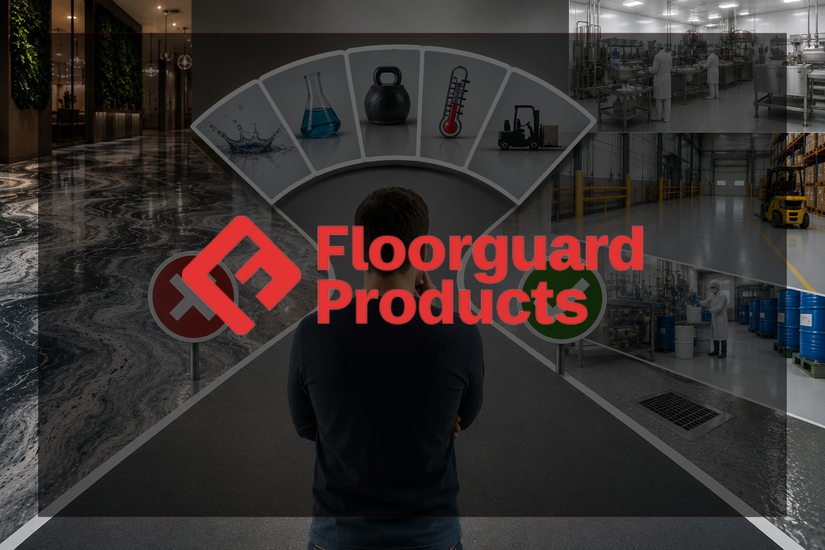
The Most Expensive Flooring Mistake Happens Before Installation Ever Begins
When selecting a resinous flooring system, many people start with the wrong question:
"What system looks the best?"
Or:
"What's your most popular floor?"
The problem is that flooring systems don't fail because they weren't popular.
They fail because they weren't designed for the environment they were installed in.
The reality is simple:
Every floor is exposed to stress.
The key is identifying which stressors will be present and selecting a system engineered to withstand them.
The most successful flooring projects aren't built around aesthetics.
They're built around performance.
Start with the Environment, Not the Product
One of the biggest mistakes in flooring selection is choosing a product before evaluating the environment.
Instead, begin by asking:
What will this floor experience every day?
The answer drives everything that follows.
Every Floor Faces Different Stressors
A warehouse floor and a food processing floor may look similar.
Their performance requirements couldn't be more different.
One may experience:
- Forklift traffic
- Abrasion
- Impact
The other may experience:
- Thermal shock
- Hot water washdowns
- Organic acids
- Constant moisture
Selecting the same flooring system for both environments would likely create problems.
The Five Questions Every Flooring Specification Should Answer
Before selecting a flooring system, evaluate five critical categories.
Traffic
Chemical Exposure
Thermal Exposure
Moisture Exposure
Aesthetic Requirements
Most flooring failures can be traced back to one of these factors being overlooked.
Step 1: Evaluate Traffic Conditions
Traffic is often the first design consideration.
Ask:
What will be moving across the floor?
Examples include:
- Pedestrian traffic
- Shopping carts
- Pallet jacks
- Forklifts
- Steel-wheel equipment
- Manufacturing machinery
Light-Duty Environments
Examples:
- Offices
- Retail spaces
- Showrooms
Typically prioritize:
- Appearance
- Ease of cleaning
- Moderate durability
Decorative flake, metallic, or solid-color systems are often excellent choices.
Medium-Duty Environments
Examples:
- Warehouses
- Distribution centers
- Light manufacturing
Typically require:
- Abrasion resistance
- Impact resistance
- Long-term durability
Broadcast systems often outperform thin-film coatings in these environments.
Heavy-Duty Industrial Environments
Examples:
- Manufacturing facilities
- Production plants
- Equipment maintenance areas
Typically require:
- High compressive strength
- Heavy abrasion resistance
- Impact resistance
- Long-term durability
These environments often benefit from thicker industrial-grade systems.
Step 2: Evaluate Chemical Exposure
Not all chemicals affect coatings equally.
A floor exposed to water is very different from a floor exposed to aggressive chemicals.
Questions to Ask
Will the floor see:
- Oils?
- Fuels?
- Solvents?
- Acids?
- Caustics?
- Cleaning chemicals?
- Food byproducts?
The type, concentration, temperature, and exposure duration all matter.
Mild Chemical Exposure
Examples:
- Retail
- Commercial
- Educational facilities
Most standard resinous systems perform well.
Moderate Chemical Exposure
Examples:
- Automotive facilities
- Warehouses
- Maintenance shops
Typically require enhanced chemical resistance.
Severe Chemical Exposure
Examples:
- Food processing
- Pharmaceutical production
- Chemical manufacturing
May require highly specialized systems designed specifically for aggressive environments.
Step 3: Evaluate Thermal Exposure
Heat destroys many flooring systems.
Unfortunately, thermal exposure is frequently overlooked.
Questions to Ask
Will the floor experience:
- Hot water washdowns?
- Steam cleaning?
- Temperature cycling?
- Thermal shock?
- Freezer conditions?
If the answer is yes, thermal performance becomes critical.
Why Thermal Shock Matters
Thermal shock occurs when the floor experiences rapid temperature changes.
Examples include:
- Hot water on a cold floor
- Steam cleaning
- Boiling liquids
- Food processing washdowns
These conditions create expansion and contraction forces that many coating systems cannot tolerate.
Step 4: Evaluate Moisture Conditions
Moisture remains one of the leading causes of flooring failures.
Before selecting a system, determine:
What is the slab moisture condition?
Questions include:
- Is the slab on grade?
- Is vapor transmission present?
- Has moisture testing been performed?
- Is a moisture mitigation primer required?
Ignoring moisture doesn't eliminate moisture.
It simply transfers the problem into the finished flooring system.
Step 5: Evaluate Slip Resistance Requirements
A beautiful floor that creates a slip hazard isn't a successful floor.
Consider:
- Dry conditions
- Wet conditions
- Oils and grease
- Cleaning procedures
- Pedestrian safety requirements
The level of texture required should be based on the actual environment.
Not every floor needs aggressive texture.
Not every floor should be smooth.
Step 6: Evaluate UV Exposure
One question often overlooked:
Will sunlight reach the floor?
If the answer is yes, UV stability becomes important.
Examples include:
- Loading docks
- Open bay doors
- Exterior walkways
- Showrooms
- Covered outdoor spaces
Some resin technologies maintain color and gloss far better than others under UV exposure.
Step 7: Determine Downtime Requirements
How quickly must the facility return to service?
This single question can dramatically influence system selection.
Some facilities can tolerate several days of downtime.
Others cannot.
Examples include:
- Distribution centers
- Manufacturing plants
- Food facilities
- Emergency service facilities
Fast-return-to-service systems often become critical in these environments.
Don't Select a Resin—Select a System
This is perhaps the most important concept in flooring design.
Many people ask:
"Should I use epoxy?"
"Should I use polyurea?"
"Should I use polyaspartic?"
Those questions miss the point.
The goal isn't selecting a resin.
The goal is selecting a flooring system.
Most high-performance floors combine multiple technologies:
- Moisture mitigation primer
- Structural body coat
- Broadcast layer
- Wear-resistant topcoat
Each layer serves a specific purpose.
The complete system is what matters.
Match the Floor to the Environment
Decorative Commercial Spaces
Primary Driver: Appearance
Typical Solution: Decorative flake or metallic systems.
Warehouses and Logistics Facilities
Primary Driver: Abrasion and traffic.
Typical Solution: Broadcast aggregate or industrial-grade systems.
Food & Beverage Facilities
Primary Driver: Thermal shock, moisture, and chemical exposure.
Typical Solution: Heavy-duty urethane cement systems.
Manufacturing Facilities
Primary Driver: Impact, abrasion, and durability.
Typical Solution: Industrial broadcast systems or high-build resin systems.
Automotive Facilities
Primary Driver: Chemical exposure and traffic.
Typical Solution: Decorative flake or industrial broadcast systems with chemical-resistant topcoats.
The Best Flooring Question You Can Ask
Instead of asking:
"What's your best flooring system?"
Ask:
"What conditions will this floor experience over the next 10 years?"
That answer will lead you to the correct system much faster.
Bottom Line
Successful flooring selection isn't about choosing the most expensive system.
It's about choosing the most appropriate system.
The right flooring design begins with understanding:
- Traffic
- Chemical exposure
- Thermal exposure
- Moisture conditions
- UV exposure
- Slip resistance requirements
- Downtime limitations
The environment determines the requirements.
The requirements determine the system.
And when those two align, flooring performance follows.
Because the best resinous flooring system isn't the one that looks the best on installation day.
It's the one that's still performing years after everyone has forgotten it was installed.