


The Floor Doesn't Fail Overnight: Why Cleaning and Maintenance Are Critical to the Life of a Resinous Flooring System
Posted by Floorguard Products on Jun 10th 2026
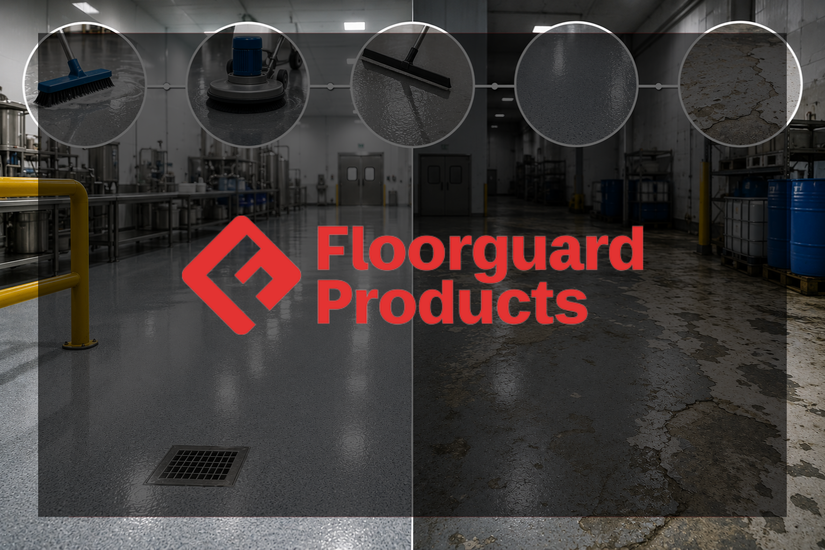
The Most Cost-Effective Flooring Investment Isn't a New Floor—It's Taking Care of the One You Already Have
A facility spends thousands—or sometimes hundreds of thousands—of dollars installing a high-performance resinous flooring system.
The floor looks great.
The installation is successful.
Then maintenance becomes an afterthought.
Months later:
⚠️ Loss of gloss
⚠️ Surface scratching
⚠️ Embedded dirt
⚠️ Chemical staining
⚠️ Premature wear
⚠️ Reduced slip resistance
⚠️ Costly repairs
The immediate assumption is often:
"The floor is wearing out."
In reality, many resinous flooring systems don't fail because they're old.
They fail because they're neglected.
Just like a vehicle requires oil changes and tire rotations, resinous floors require routine cleaning and periodic maintenance to achieve their full service life.
The goal isn't simply keeping the floor clean.
The goal is protecting the investment.
Every Floor Is a Wear Surface
No matter how durable a resinous flooring system may be, it is still a wear surface.
Every day the floor is exposed to:
- Foot traffic
- Forklift traffic
- Dirt
- Sand
- Dust
- Chemicals
- Cleaning solutions
- Water
- Impact
Over time, these exposures begin affecting the floor's appearance and performance.
Maintenance is what slows that process.
Dirt Is More Destructive Than Most People Realize
One of the biggest threats to resinous flooring isn't forklifts.
It's dirt.
Specifically:
Abrasive dirt.
Dust, sand, and grit act like sandpaper beneath foot traffic and equipment wheels.
Every pass across the floor creates microscopic scratching.
Over time this can result in:
- Loss of gloss
- Surface dulling
- Increased wear
- Reduced cleanability
The floor may still be structurally sound.
It simply begins aging faster than necessary.
Cleaning Is Preventive Maintenance
Many people view cleaning as housekeeping.
In reality, proper cleaning is one of the most important forms of preventive maintenance.
Routine cleaning helps remove:
- Abrasive contaminants
- Chemical residues
- Oils and greases
- Surface soils
- Traffic-related debris
Removing these materials before they accumulate significantly reduces long-term wear.
A Dirty Floor Is Harder to Keep Clean
As contamination builds, cleaning becomes increasingly difficult.
Surface soils begin filling:
- Texture profiles
- Aggregate surfaces
- Broadcast systems
- Slip-resistant finishes
This often creates a cycle where:
More contamination leads to more aggressive cleaning.
More aggressive cleaning leads to increased wear.
In many cases, routine cleaning prevents the need for aggressive cleaning later.
Not All Dirt Is Equal
Different facilities face different contamination challenges.
Warehouses
Common contaminants:
- Dust
- Tire residue
- Abrasive grit
Food & Beverage Facilities
Common contaminants:
- Sugars
- Oils
- Organic materials
- Cleaning chemicals
Manufacturing Facilities
Common contaminants:
- Hydraulic fluids
- Grease
- Metal shavings
- Production residues
Automotive Facilities
Common contaminants:
- Oil
- Brake dust
- Tire residue
- Automotive fluids
Understanding what is landing on the floor is critical to developing an effective cleaning program.
Cleaning Frequency Matters
One of the most common mistakes is waiting until the floor looks dirty before cleaning it.
By that point, contamination has often been present for days or weeks.
Instead, cleaning schedules should be based on:
Traffic Volume
Contamination Levels
Operational Demands
Industry Requirements
The busier the environment, the more frequently cleaning should occur.
The Best Cleaning Program Is Consistent
A consistent cleaning schedule is far more effective than occasional deep cleaning.
Think of it this way:
Would you rather remove a small amount of contamination every day?
Or attempt to remove months of buildup all at once?
The answer is obvious.
Consistency wins.
Daily Cleaning Protects the Surface
Routine cleaning helps remove contaminants before they can:
- Become abrasive
- Cause staining
- Build up in textures
- Accelerate wear
For many facilities, simple daily dust mopping, sweeping, vacuuming, or microfiber cleaning can dramatically improve long-term floor performance.
Mechanical Scrubbing Improves Results
For larger facilities, automated floor scrubbers often provide the most effective cleaning method.
Benefits include:
- Consistent cleaning
- Improved soil removal
- Reduced labor
- Better appearance
- Extended floor life
The right equipment often pays for itself through reduced maintenance costs and improved floor longevity.
Choosing the Right Cleaner Matters
Not all cleaning products are floor-friendly.
Some cleaners leave residues.
Others may be too aggressive.
The ideal cleaner should:
- Effectively remove contamination
- Be compatible with the flooring system
- Leave minimal residue
- Support long-term performance
More aggressive chemistry is not always better.
Sometimes it's simply harder on the floor.
Maintenance Cycles Are Different Than Cleaning Cycles
This is where many facility owners get confused.
Cleaning and maintenance are not the same thing.
Cleaning removes contamination.
Maintenance preserves performance.
Both are necessary.
Think of Maintenance Like Repainting a House
You don't wait until the wood rots before repainting.
You repaint before major deterioration occurs.
The same principle applies to resinous flooring.
Periodic maintenance helps restore the wear surface before damage reaches the underlying system.
The Wear Layer Is Designed to Be Maintained
Most resinous flooring systems are built in layers.
The topcoat is typically the sacrificial wear surface.
Its job is to absorb abuse and protect the underlying system.
Over time, the wear layer gradually deteriorates.
This is normal.
The goal is to restore it before deeper damage occurs.
Why Periodic Recoating Makes Sense
One of the most cost-effective maintenance strategies is periodic topcoat renewal.
Rather than waiting for system failure, the floor can be:
- Cleaned
- Mechanically abraded
- Recoated
This restores:
- Appearance
- Chemical resistance
- Gloss retention
- Cleanability
- Wear resistance
At a fraction of the cost of complete replacement.
The Cost Difference Is Significant
Consider two scenarios.
Scenario One
No maintenance.
No cleaning program.
No recoat cycle.
The floor eventually requires major repairs or replacement.
Scenario Two
Routine cleaning.
Scheduled inspections.
Periodic maintenance topcoats.
The floor remains in service for significantly longer with lower overall ownership costs.
The difference can be measured in years—and often tens of thousands of dollars.
Warning Signs That Maintenance Is Needed
Watch for:
⚠️ Loss of gloss
⚠️ Surface scratching
⚠️ Increased staining
⚠️ Reduced cleanability
⚠️ Texture wear
⚠️ Aggregate exposure
⚠️ Localized wear patterns
These are often indicators that maintenance should occur before larger issues develop.
The Most Successful Facilities Plan Ahead
The best flooring programs don't react to failures.
They prevent them.
Successful facilities typically establish:
- Daily cleaning schedules
- Weekly inspections
- Periodic deep cleaning
- Annual condition evaluations
- Planned maintenance cycles
This approach maximizes floor performance and minimizes unexpected expenses.
A Simple Rule to Remember
Cleaning protects today's floor.
Maintenance protects tomorrow's floor.
Both are essential.
Bottom Line
A resinous flooring system is an investment.
Like any investment, its lifespan depends on how well it is maintained.
Routine cleaning removes contaminants that accelerate wear.
Scheduled maintenance preserves the protective wear surface.
Periodic recoating restores performance before major deterioration occurs.
The result is:
- Longer service life
- Better appearance
- Lower ownership costs
- Reduced repairs
- Improved facility performance
Because the best flooring system isn't necessarily the one that was installed perfectly.
It's the one that is still performing years later because it was properly maintained.
And that starts with a cleaning schedule.